
--------------------------------------
MAJOR SPOILERS BELOW!
--------------------------------------
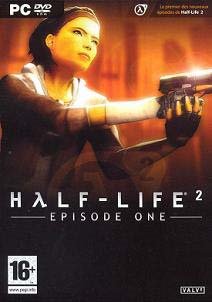
HALF-LIFE 2: EPISODE ONE POST-MORTEM
This feedback is dedicated to HL2:EP1 and is divided into five sections.
(Episodic Content, Character Relationship, Weaknesses, Strengths, HL3).
FYI: I have completed EP1 along with all other Valve products.
EPISODIC CONTENT
Even though Half-Life has already been episodic with it expansion packs and the sequel, it's first formal episodic content has delivered brilliantly. Well done.
But as exciting as this new step forward has been for the HL franchise, my only concern is what side effect being formally episodic has to its content. Particularly in regards to innovation. Whereas true sequels require innovation, formally episodic content can fall quickly into a steady pattern of only meeting a perfunctory list of basic criteria, and little more. For example: each new episode of any episodic content (of any franchise) will need to deliver on a set of basic requirements to make it a valid and worthwhile iteration of the series (and purchase for the customer):
- A technological tweak (HDR Bloom)
- A new enemy (Zombine)
- A new weapon (flares)
- A memorable experience (Being thrown across the chasm)
- A reveal of the greater plot (Destruction of the citadel)
- A teaser for the next episode (A glimpse of the Hunters)
- All our favourite characters (D0g, Alyx, etc).
HL2 obviously delivered in all these areas. It was not an advance in terms of leaps and bounds from what we have seen before, but it was a sure and steady single step forward. Opposing Force on the otherhand, a mere expansion pack, went far beyond what Episode One did in the context of the above criteria. (And was hailed accordingly).
However this seems to be the true role of episodic content, to dole out the excitement of a franchise in measured steps leaving the role of innovation to the mod community and its official sequels. Is this measuring down also a watering down, or does the industry work better for a franchise in more manic bursts? Time will tell.
Personally I was hoping for one of two things: either a stronger story-driven game, or more new content to compensate. It should be said here that, in my opinion, the atmosphere and experience of HL2 was very satisfying when valued at its parts, but I couldn't appreciate it in the context of the whole because I felt there was a lack of story telling prowess that the first Half-Life excelled at. I go into this later (under the section Weaknesses). So even as I still had a geat time playing both HL2 and EP1, it did end up being a series of exciting events, rather than a cohesive whole experience. For example, being thrown across the chasm was a fun idea, even if the "roller coaster ride" that came diretly after it seemed a tad corny, but essentially this was part of what you paid your 20 bucks for. The other reason was to battle some new enemies and gain more insight into the story left behind from HL2, which had left me with more questions than answers.
This really is enough to sustain episodic content, but the player will always know that any dramatic improvement to the engine, or even gameplay, must come from a completely new game, like HL3 for instance, and not the episodes following HL2. I personally believe you will successfully reach EP3 before players tire from the abscence of anything substantially new (beyond the above mentioned criteria at least) and start moaning for HL3.
The fact is though, that's exactly what I hope you do.
CHARACTER RELATIONSHIP
If you were to read only one section in this letter I hope it is this one, as I think this is the area you place most importance on when crafting a game, and it is what I'm most concerned about when playing a game. It might not be what attracts me to a game to begin with, but it's certainly what keeps me there.
It's true that you reinvented character relationships in the FPS genre with the original Half-Life by using the rudimentary stay/follow command, not to mention the clever use of the NPC's idle banter and their recognition of you as a person in their world, but you certainly accelerated the idea in HL2, and refined it even more with EP1.
You may be slightly disappointed to hear that my greatest character relationship experience during the entire HL story arc was actually from your first game. You may be further disappointed to hear that it was also an experience unintended by your designers. It happened about half-way through the original Half-Life story where I had to get to a main elevator that led me to the surface. The areas just before this had several stranded or hiding scientists scattered here and there and I took it upon myself to rescue these people, each and every one of them, from all of the areas I had access to at the time. I ended up with a group of eleven people behind me. 7 scientists and 4 guards.
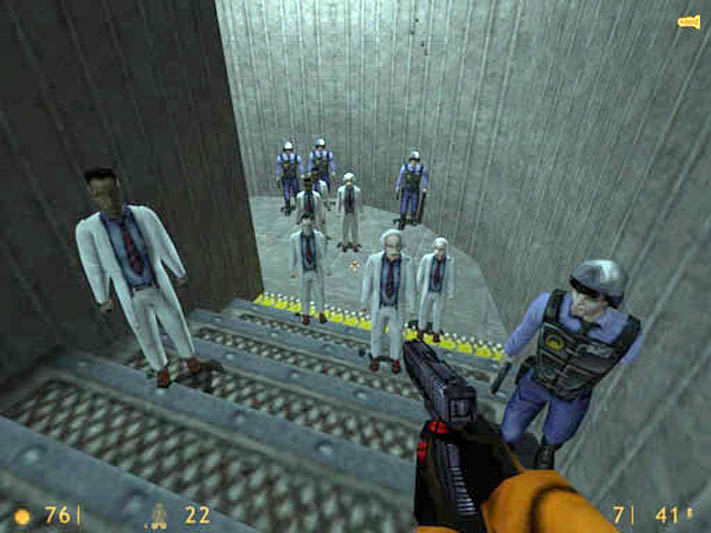
It was a great feeling to feel in charge of a group whose safety I was responsible for, and who were trusting enough to follow me and, in the guards cases, even to lend a hand. I had to organise them in stages by grouping them in safe areas while I cleared the area ahead. I also felt a bond with these people, like I was really helping, and I imagined what it would be like if they were bantering with each other, becoming friends and enemies within the group, and each one acting on whatever strengths they had to help- like in classic disaster movies. The opportunity to have real drama in this circumstances was clear. At the end of my rescue adventure I reached the elevator hoping to bring them up and lead them to safety, but alas this never happened because it was never intended for me to rescue them in the first place, let alone all of them. I was hoping that by rescuing a total number I would be rewarded by them returning with back-up, perhaps during a tough boss fight, or even to activate something that would grant me access to a secret area, or make my progress easier in some way. This experience, although unintended, was the most compelling character-based interaction I felt during the entire HL series. It may be of interest to you that I felt the same type of emotional bond in the PS2 game, Ico, only much much deeper.
The kind of emotional bond you're trying to achieve for players with Alyx is not only very different to this, but I'll assert: impossible. The problem with Alyx is that you're not really helping her. She can look after herself. When you do "help" her reach a switch to open a door, you're actually helping yourself. She doesn’t really enter into the player's "need equation". The player must care about Alyx's safety before we can even start thinking of Alyx as a real person (in the context of an action-themed adventure).
The other game, besides Ico, that had a strong character relationship for me was Prince of Persia: Sands of Time. In this game the Prince would bicker to himself about what an ingrateful and annoying woman his female counterpart is (when she wasn't there of course) and that she needed to be tamed like all women, and then he would drop his chauvenistic bravado and admit that he admired her in some way, and then snap himself out of it. Beyond being a hilarious insight into the character's mind, the believable relationship that slowly built up between the two created a relationship that you soon became emotionally attached to, and then wished to preserve in how you played the game. Being a well-scripted, well-paced and well-acted unfolding of events allowed for most of this emotional work to be done for you however. Essentially, the player was forced to follow the motivation of the character they played, not their own, but how much you wished to do this was determined by how much you were affected by its story.
The Prince's love interest, Farah, was very much like Alyx in her tone and temperament and is closer to the type of relationship you're aiming for with Alyx and Gordon. The main problem in creating this kind of relationship though is that Gordon isn't actually a character. He's a ghost without personality, or expression, or voice. Essentially, he is a gun with eyes, and because the gun element isn't valid when relating to Alyx we can simplify it even further: Gordon Freeman is merely a floating set of eyeballs. Period. To ask the player (Gordon) to have a relationship with Alyx is weakened by this degree of minimalism because all a floating set of eyeballs will do is look at what it likes and dislikes and approve or disapprove. And that's as far as the relationship can go. Fairly superficial, really. This may explain why a lot of players approved of Dr Breen's lab partner, Judith Mossman, over Alyx because of simple physical preferences. Eyeballs, it seems, are rather fickle.
So how do you solve this?
I have some suggestions in the last section (HL3) for advanced solutions, but in practical terms (particularly with the limitations of episodic content) my key suggestion is to think like a woman.
Put yourself in Alyx's shoes: Imagine the guy you were interested in wasn't giving you any of the kind of attention you really wanted from him. He's distant. Cold. He has never touched you with his hands, even though you've hugged him. And as much as you try you can't get a word out of the guy. So you do the only thing you can do: You make him jealous.
Why not make Alyx fall in love with another NPC? Anyone but you. Make her new sweetheart a pathetic, but endearing peacenik. An emotionally sensitive guy (everything you're not) and who is a mouthpiece for the soul of the resistance (another thing you cannot be, since you have no mouth), yet he is conflicted with himself because he detests violence (Okay, you hate him). And then engineer events so that, not only do you bear witness to the blossoming of this forsaken love, but you are put in a position where you actually have to protect the guy you now hate. Ha ha ha ha haa… Have Alyx choose whether to go out and help her fancy pants new boyfriend, or to stay on and help you- And get her to choose him. That's got to hurt. But why stop there? There is so much more you can do with this new guy. At the end of the game, kill him, just after the player has approved of the couple, and even begins to like the guy. Be cruel. It works. And in doing so the player is now more emotionally closer to Alyx because they've experienced a wider range of emotional with her. It requires a stepping back in order to move further forward.
Personally I was never truly emotionally invested in Alyx, or her father (even though I had many fond memories of the tv show- Benson). But I did get very emotionally invested in the plight of the citizens of City 17, which made me disappointed that there wasn't an emotionally satisfying conclusion to their plight at the end of HL2. On this point, I also was very opposed to the way these citizens were used as cannon fodder during the game. It cheapened the experience of fighting with them, knowing they have been assigned to my squad with the pre-arranged purpose of dying in battle. This also obviated any emotional response I could have had to them. At least when I rescued those 11 people in the original Half-Life I could be happy knowing I left them alive.
Even though I expected casualties with the citizens of City 17, I didn't like being put in a position where I had to use their lives in order to preserve my own. I realise the scenario in HL2 is that of a civil war, but I wanted to know the people I fought with longer than a transition between chapters. I wanted to know their names, form opinions about them, to remember them next time we met and appreciate their different personalities. And I wanted to ensure that the people who fought with me all survived. Just as I felt during my experience of rescuing the group of 11 scientists and guards in the original Half-Life.
As an example of this in play, imagine there are 4 citizens of City 17 whom you've given names to. Tom, Dick, Harry and Rosanna. If you choose to, they can fight with you during the entire game, right to the end even- if you can ensure their survival. They all have specific dialogue that is recorded for this perfect-score scenario, enhancing the story without being crucial to it. There may even be a specifically orchestrated scene in which one of them dies (Dick) or close to it, simply for drama's sake. But this is a scene that a player, who hasn't bothered to preserve their lives, obviously wouldn't see.
If any of these four dies they are replaced by a no-name stand-in (like the current citizens of City 17) who spout their regular occasional phrases, and the rest of the game is played in this way. If you're a fun junkie you'd lose your core team in the first few battles and the big explosion at the end will be enough to satisfy you. If you're into being immersed in the experience then you'll see that your team survives to the end, and the emotional reward is the enhancement to the game that you've worked to achieve.
WEAKNESSES
The story of HL2 and EP1 both suffer from a disunity of ideas. To explain what I mean by this phrase I'd like to refer to the original game, Half-Life, which had a strong unity of ideas. In the original HL I was introduced to its world (with a train ride) so that I could have a strong understanding of how much things will have changed after the disaster. This meant that I had a contextual starting point to work from. I then made my way through what was causing the disaster, and finally to it's source. It is a clear journey, and the elements along the way make sense to each other, and even strengthen each other in their interactions. I start at one world and end at another, but the elements between make it clear why.
The story of HL2 and the Episode One lack this clear exposition of ideas (and events). It's as though I started reading a book half way through and put it down before I got to the end. For example:
When I arrived at City17 I soon realise it has been invaded and subjugated by the Combine. The problem is I have no idea what it looked like before, so I can't have any emotional response to what it looks like now, apart from my immediate response. Nor do I have much response to what happens to it from this point on. The same applies to its citizenry. I am compelled to help them because they are clearly oppressed, but I don't know what they've been through, nor how much they've changed, nor even who they are as a people. This helps support what I mentioned before about creating a bond with the people you fight with. If more of the NPCs could have been given more lasting personalities, instead of being disposable, it would have provided an excellent opportunity for story exposition and the evolving emotional ties which would have helped deepen the experience of the game.
From the perspective of Gordon Freeman the world of HL2 seems like an alternate reality. I don't know if the Ant Lions are part of this world, or part of the Combine's world, or even if they are related to the incident at Black Mesa. I've never seen the Ant Lions before, even on Xen. Does any character in the game ever explain where they come from?
Another story element that passes without explanation is the dried sea bed. I don't know if this was a result of Black Mesa, the invasion, or global warming.Essentially, the HL2 and EP1 story elements are floating around without relation to each other. Each element is cool in their own right, but they're not working together. It makes for a great game, but tough to write a story with an engaging narrative.
It's ironic that HL2 is set in a European city, because it provides a wonderful metaphor to encapsulate my overall impression of the HL2 world: It comes across as foreign, and at the end of the day my experience of it is that of a tourist, not a resident. This is the crucial difference between my enjoyment of the original HL, a game that is one of my top five favourite games I've ever played, and HL2, a game that was a stunning achievement, a wonderful and thrilling experience, but just not as emotionally gripping as the first.
(Judging by one of Alyx's anecdotes, the world of HL2 could very well be an alternate reality: Just as I was about to crawl into an air vent, Alyx spoke about how "some days" Dr Kleiner, Barney and I (Gordon) used to race each other into an empty office room via air vents and other means. This never happened. I didn't spend a single day at work with either Barney or Dr Kleiner for this to be possible. The Black Mesa incident happened on my first day on the job. What exactly was she talking about?)
STRENGTHS
I've definitely been very honest in my feedback. As honest as I can be. But I also hope I've been fair, and not harsh. The strongest thing I can praise about HL2:Episode One is that it's more of the Half-Life 2 that I've enjoyed so much in the past.
Or to put it another way, it's more of Valve. The quality of this product is incredible, and Valve has never let us down. Not once.
My personal favourite moments during Episode One are:
When I saw my first glimpse of a Hunter.
When I saw the beautiful pulsating sphere that was the Citadel's core.
Being thrown across the chasm by D0g.
After the crash in the Stalker train.
Seeing the advisors close up as they were being evacuated in their escape pods.
Watching the citadel collapse at the very end.
Blocking antlion hives with car bodies.
The list goes on and on. Each scenario had a signature of cool. It was exciting, tense, and fun. Everything we've come to expect, but with a little bit more.
HALF-LIFE 3
In HL3 I want it to open up to a very blurry image of Gordon. He moves his glasses into frame and puts them on. We see ourselves as him looking into a mirror. We get closer and see the detail of our face. Our hand wipes over our eyes and rests at our beard, scratching it. The face is war weary and heavy with emotion. Gordon says: "You look like shit". We turn a little to see behind us the G-man. The mirror shatters. The room fragments. White light fills the space and we are now hurtling fast through a dark void. We look down at our hands. We see our body, slowly spinning in the air. The player gains control. Pieces of the room float around us. We are drawn to a powerful light. We come to our senses in a steel room. The G-man sits opposite us, "Hello, Mr Freeman". We look down, we are strapped to a chair. We listen, and wait.
Basically I would like Gordon to have a body, and therefore a real-world presence. I want to be able to feel like I really am Gordon Freeman and that when a player hugs me (like Alyx did) it actually means something in relation to the player. Or when I'm on a thin ledge I want to look down and see where my feet are and how close I am to falling off it. I want to push open doors, pull levers, type in codes- with my hand. Even to have Gordon's shadow be cast over the keyboard, or lever, or door handle, that I am operating.
Let's say I'm in a thin corridor and Alyx is just ahead of me. My gun automatically drops when my crosshairs go over her. I get closer- within touching distance. My hand touches her back and she then presses against the wall knowing that I want to pass. And I pass.
To continue the example, we reach an open room. I stand infront of a console that she needs to get to. I'm facing the console. She turns me around by my shoulder and says, "Excuse me, Gordon, but I need to operate this thing." I stand there confused, not sure what she wants me to do. She pushes both her hands on my chest, politely pushing me backwards, out of the way.
Stuff like that. The Namco game, Breakdown, has begun this trend. What this would mean to the implausible idea of Gordon carrying around his entire arsenal is another thing entirely. Personally I think the character elected gun limit is a proven idea, thanks to Halo. Imagine the gravity gun has been modified into a glove. This would allow for, say, a three gun limit (plus grenades) to envigorate the combat experience. When the ammunition is out the default becomes your hand/gravity gun. I like the notion of carefully hanging on to particular weapons, and using Alyx to hold two of my less used ones. This creates an extra dependency on her and keeps things believable. It also provides excellent opportunities for drama when Alyx is separated from me and I'm left with my minimum number of weapons to survive.
And, yes, I want Gordon to speak. Not a lot, but enough to know his personal motivation.
This begs the question however: If Gordon is a full-bodied, speaking, thinking individual, then is this still Half-Life? Or is it an altogether new product? Can the fundamentals of HL evolve with the game's success and still maintain the integrity of the original product? I believe it can. Obviously there are some lines that can't be crossed, for very specific reasons, but I believe the ability to speak does not harm the experience of the game, but enhances it. In fact, it would make the balancing act between story-telling and the action that much easier. Afterall, the in-jokes of Gordon's silence can only stretch so far.
I would also like my second monitor to be a complimentary screen for the action happening in the game. To explain: As I'm playing the game on one monitor, in first-person, on the other monitor I can see a variety of related images. These may take the form of: a roving camera (as if an invisible movie director is filming me); or seeing through the eyes of another character that I send off to get help (like D0g); or it could be a map of my surroundings; or the view from my recently-fired guided missile, etc, etc…
I'd like to be able to drag this view into my main screen as a smaller HUD window (on my suit's visor, if you will)- because I also want people who don't have an extra screen to enjoy this concept. My reasons for requesting this extra screen for the action primarily comes from the need to identify myself as a character existing in and interacting with the HL2 world, and to also act as a constant visual reminder of who I am, what I'm doing and why I'm there in the first place.
Secondary to the reasons for this request are the possibilities it opens for new types of gameplay. With a second screen at my disposal obviously teamwork can be incredibly enhanced. Timing your actions to the other characters behaviour. Even using the map to assign the other character/s to new locations. Or even... to hack a Combine security system and use the sentry guns and other equipment against the Combine soldiers allowing you, by proxy, to navigate Alyx safely through the building. (This is an idea stolen directly from one of my favourite Amiga games: Interphase).
I'd also like to see the ragdoll physics on humans less like a ragdoll, and more like a human. For instance when a Combine soldier dies they fall to the ground in an immediate and discracefully floppy spectacle. I'd like to see a gradation of control if even over a second or two between the point of zero health and the time they hit the ground. I'd also like to see them maintain some elastic tension of their limbs that can keep them in a relatively believable position once limp. Too often I see the bodies of the Combine twisted in positions that are simply not believable, and therefore breaking the illusion of the moment.
It would be wonderful to see the Combine get hurt and limp away, retreating to a med-unit. (Afterall, they were put there for them. Weren't they?) To have the Combine work as a squad more, like the marines did in the original. This was incredibly challenging, and very rewarding when successfully defeating them. Even if the Combine can convert humans to their ranks, it would still make for very interesting combat to see the Combine rescue their wounded.
It's very difficult, extreeeemely difficult for me to stop writing down these ideas, as you have probably already noticed, but I'll fight the urge to continue and stop here.
Gabe, for me to write as much as I have should be an excellent indicator to how much I appreciate and admire your work. Thank you for providing us with such a wonderful experience.
My highest regards,
Mat Brady

